
You may have noticed more kids wearing glasses today than a few decades ago. At Total Vision San Clemente, we know that blurry distance vision can make it hard for your child to read the board at school or catch a ball at the park. But it doesn’t just affect children: Squinting can make driving or reading a presentation from across the room difficult for adults, too. These daily frustrations show up in homes around the world.
Though it varies by region, it’s estimated that myopia affects around 2 billion people worldwide, and rates of myopia only continue to rise. The good news is that how quickly myopia progresses can be slowed, which is something our team is here to help with.
The Global Rise of Nearsightedness
Current Numbers Worldwide
You might wonder how many people share this vision challenge today. Nearsightedness affects billions of people worldwide, and rates have increased significantly over the past few decades.
Myopia is being detected at younger ages than in the past, which means classrooms are filled with students relying on glasses to see the front of the room. This trend is thought to be linked to modern lifestyle factors that are changing how the human eye develops.
Projections for 2050
The numbers look even larger when you look ahead. Half the world might become nearsighted by 2050, though this varies by region. That equals nearly 5 billion people worldwide who may need glasses to see far away.
Why Myopia Is More Common Now
Genetics and Family History
Your family tree plays a role in how your eyes grow. Kids often inherit nearsightedness from their parents. For example, a child with 2 nearsighted parents has a higher chance of needing glasses than a child without nearsighted parents.
However, genetics alone doesn’t explain the global increase over recent decades because human DNA doesn’t change fast enough to account for this many new cases. That means other factors must be playing a role in this widespread shift in vision.
Daily Screen Habits
Your environment shapes your vision just as much as your genes. Extended near work, including screen use, may be influencing how eyes develop. Many children spend less time outdoors and more time indoors on near tasks than in the past, which may be impacting myopia rates.
Signs of Myopia in Children
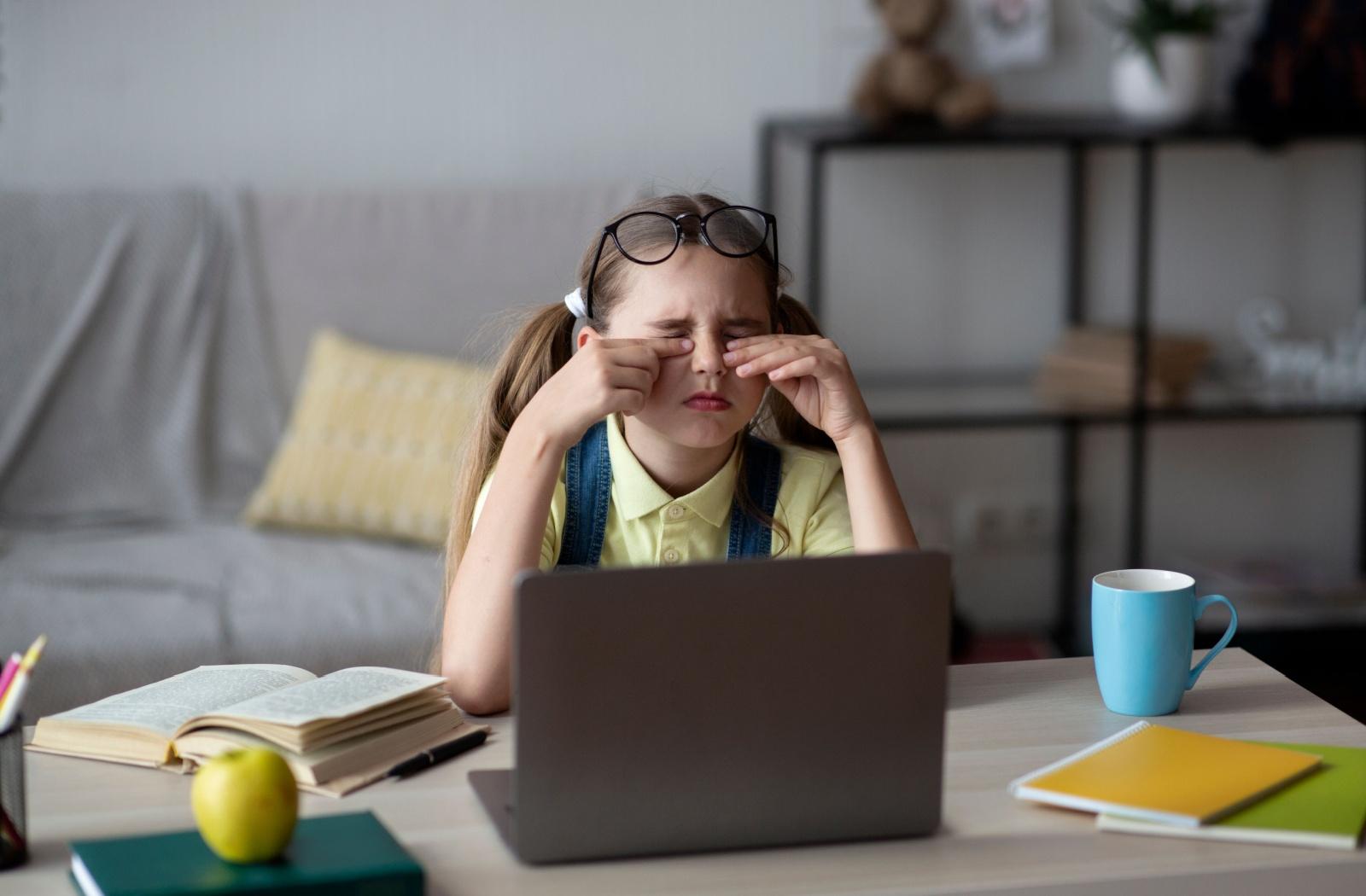
Kids often don’t realize their vision looks different than normal, so it’s important for you to know what to look for. A child might struggle to see the board at school but read a book easily. You know your child better than anyone, so pay attention if they are:
- Holding books or tablets very close to the face
- Sitting close to the television screen at home
- Squinting or rubbing eyes frequently during the day
Noticing these signs quickly can help you get the right care. Early intervention with myopia control options can slow the rate at which their prescription progresses.
Long-Term Effects on Your Eyes
Changes to the Eyeball
Myopia happens when the eyeball grows too long from front to back. This means that the focusing point isn’t on the correct spot at the back of the eye, called the retina. This is where glasses come in: Single-vision lenses are designed to focus light on the retina, providing clear sight.
Other Vision Risks
An elongated eyeball can stretch the sensitive tissues inside your eye. High levels of nearsightedness (having a very strong prescription) can increase risks for future eye conditions, like retinal detachment, glaucoma, or certain types of cataracts.
Healthy Habits for Clear Vision
The 20-20-20 Rule
Your eyes need frequent breaks from digital devices to stay comfortable. You can practice the 20-20-20 rule to relieve eye strain: Look at something 20 feet away for 20 seconds every 20 minutes to give your eyes a rest.
Time Outdoors and Eye Exams
Taking a break outside gives your eyes room to focus on distant objects. Natural sunlight has also been associated with healthy eye development in children, so we recommend 1–2 hours of outdoor play every day.
Schedule an Eye Exam for the Family
Routine visits can help detect vision changes early, when treatments are often more effective. Our team at Total Vision San Clemente is here to monitor your visual health and help you see every detail of your life with clarity. Schedule your family’s eye exams today.